
“What were we doing out here? What was the meaning of this trip? Did I actually have a big red convertible out there on the street? Was I just roaming around these Mint Hotel escalators in a drug frenzy of some kind, or had I really come out here to Las Vegas to work on a story?”
Hunter S. Thompson, Fear and Loathing in Las Vegas (1971).
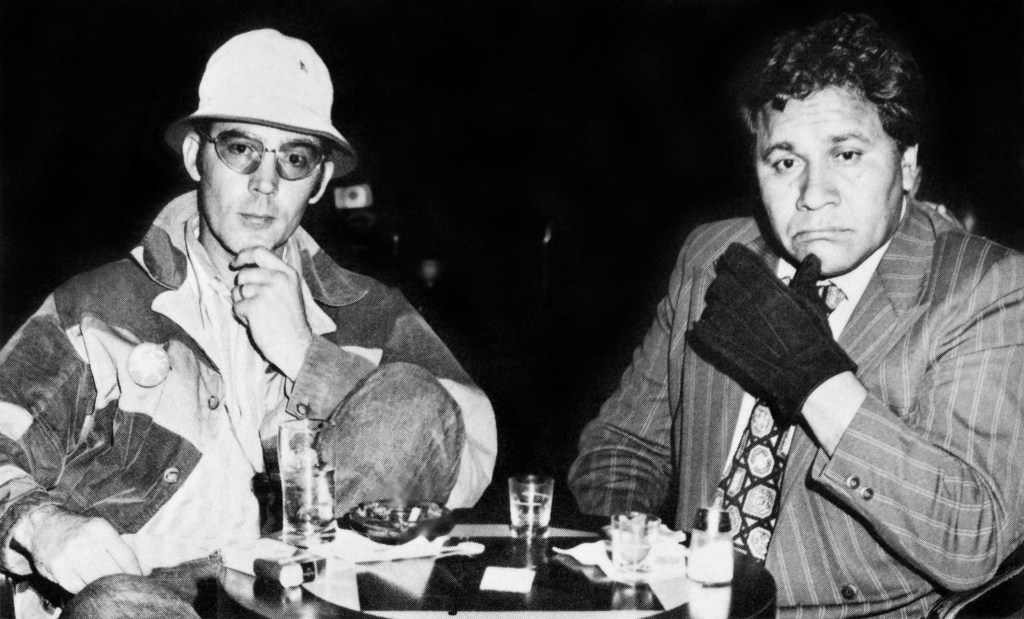
Image: Hunter S. Thompson and Oscar Zeta Acosta, Baccarat Lounge, Caesars Palace, Las Vegas (c. March–April 1971).
Photograph by Cashman Photo Enterprises, Inc. / Random House. Public domain, via Wikimedia Commons.
In 1981, an American business journalist and author, Joseph Nocera, wrote a scathing article in The Washington Post criticizing Hunter S. Thompson, the self-styled Gonzo “Doctor of Journalism.”
“Thompson has given New Journalism a bad name,” Nocera declared, “instead of being exhilarated by freedom, he was corrupted by it. Instead of using it in the search for truth, he used it for trivial self-promotion.”
In his attack, Nocera symbolizes both a larger debate around the distinction between Fiction and Non-Fiction which continues today, and a larger animosity from some critics to the techniques pioneered by Thompson and the ‘New Journalists’ who came from his era.

Image: Joseph Nocera speaking at the Berkman Center (13th September 2008).
(Photo by Doc Searls from Santa Barbara, USA, CC BY-SA 2.0 via Wikimedia Commons.)
But what really is ‘truth?’ How is it that Nocera can define this standard? And why is it that he feels Hunter S. Thompson falls so short of it?
The New Journalism
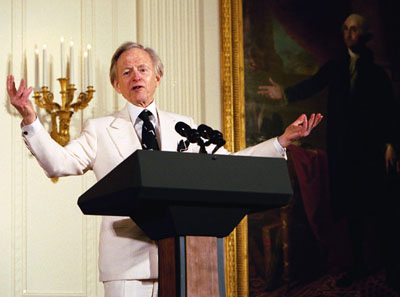
The New Journalism, pioneered in the 1960s by the likes of Gay Talese, Truman Capote and Tom Wolfe, offered, in Wolfe’s words, a “full objective description, plus something that readers had always had to go to novels and short stories for… the subjective or emotional life of the characters.”
Image: Tom Wolfe at the White House Salute to American Authors in the East Room of the White House (22nd March, 2004).
(White House Photo by Susan Sterner., Public domain, via Wikimedia Commons.)
The new remit Wolfe espoused was achieved through immediate, ‘gripping’ techniques previously associated with the realistic novel; including scene-by-scene construction, realistic dialogue, and, approaching, by Wolfe’s estimation, some sense of people’s status life.
In other words, New Journalists took their work a step further by characterizing their subjects, and inferring their place in society – their hopes, dreams, desires and behaviours (as if they were characters in a novel) – making them more three-dimensional than simple descriptions might. This new type of journalist became immersed, like his or her forebears of the realistic novel, in a sense of the lives of people, beyond verifiable, immediate facts.
Thompson, then, took this a step further by making himself the main character of his stories – often weaving an immensely disjointed (often drug-afflicted), and highly subjective first-person narrative (“pure gonzo”) through a storyline more akin to a kind of psychedelic, 1960s riff on The Odyssey than the fact-finding procedure one would expect of traditional journalism.
It is this step, in particular that, for Nocera, proves one too far.

Image: Since the 1998 Terry Gilliam film starring Johnny Depp, the escapades of Fear and Loathing in Las Vegas have become cult classic lore to successive generations, even including Halloween costume of Thompson’s character in the story.
(Scott Sandars, CC BY-SA 2.0 https://creativecommons.org/licenses/by-sa/2.0, via Wikimedia Commons.)
Fear and Loathing in Las Vegas
Fear and Loathing in Las Vegas, Thompson’s best-known work, was published in 1971 and chronicles a journey Thompson and his attorney took, barrelling through Las Vegas in a drug-fuelled frenzy, around Spring of the same year.
The direct purpose of this journey is left mysterious, and, implied by its opaqueness, perhaps irrelevant.
However, Thompson’s character continually describes (to unsuspecting bystanders, or internal monologue) that they are searching for “the American Dream.”
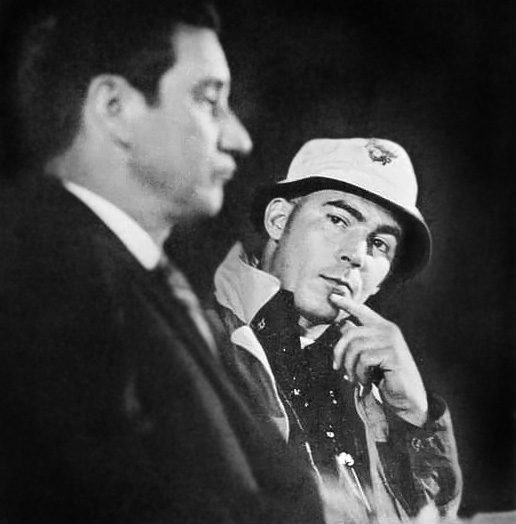
“We’re looking for the American Dream, and we were told it was somewhere in this area.” (Hunter S. Thompson, Fear and Loathing in Las Vegas).
Image: Hunter S. Thompson (right) during his 1970 campaign for Sheriff of Pitkin County, Colorado. Image via Wikimedia Commons.
Nocera’s problem begins with Thompson’s scattered, stream-of-consciousness narrative.
For Nocera, this is purely an excuse for Thompson to construct his “writing persona”, serving as a vehicle for a compelling and timely, but clearly speculative, vision of the world. This is a “a lazy shorthand college students are particularly susceptible to,” Nocera writes.
Within this perspective, what we might call Thompson’s characterisation-of-self detracts from the stated goal of the medium: to “search for truth.”
Other voices however, such as Ken Hogarty writing in The English Journal in 1991, argued that New Journalism arose from the complete failure of traditional, empirical journalism’s “mission” to eliminate the personal voice that New Journalism eventually embraced.
In this pursuit of an impossible standard of objectivity, if nothing else, a journalist’s own world view, language, and personal history were still going to, unavoidably, colour their reporting.
Indeed, the simple fact that they were on the scene to report on one story, as opposed to any other, suggests an insurmountable bias.
How then should we conceptualize the position of traditional journalism?
“The Legend on the License”
“There is one sacred rule of journalism. The writer must not invent. The legend on the licence must read: None of this was made up.“ (John Hersey, “The Legend on the License”)
Image: Portrait of John Hersey (1958) by Carl Van Vechten. Courtesy of the Library of Congress / Public Domain.
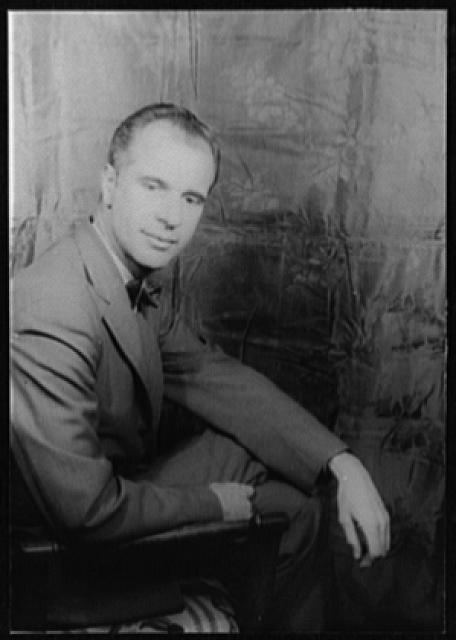
John Hersey, whose early narrative reporting pioneered techniques that later defined New Journalism, drew his own line in the sand regarding truth in his famous essay: “The Legend on the License” (The Yale Review, 1980).
In the essay, Hersey critiques Tom Wolfe, Truman Capote, and Norman Mailer, arguing that their works leaned closer to invention than reportage.
He famously declared: “There is one sacred rule of journalism. The writer must not invent. The legend on the licence must read: None of this was made up.”
While Hersey’s argument offers a clear boundary for journalistic truth, such a clean distinction becomes less defensible if we evaluate his own work as an example.
Hersey’s seminal work, Hiroshima, traces the lives of six people who survived the atomic bomb in Hiroshima using narrative storytelling to focus on the immediate horror, confusion, and individual struggles on a human level.
Though celebrated as a foundational text of narrative non-fiction, its execution actually draws heavily on the storytelling architecture of an earlier piece fiction. Hersey explicitly modeled the book’s multi-perspective structure and “braided” narrative on Thornton Wilder’s novel The Bridge of San Luis Rey.
By selecting six specific individuals out of the possible thousands, and sequentially alternating their viewpoints to fit a narrative, Hersey actively shaped reality into a curated literary arc. Although his prose uses a calm, affectless and impartial voice (avoids the flagrant, speculative internal monologues of Wolfe), that underlying narrative structure still represents a form of structural manipulation.
Consequently, while Hersey did not invent facts (or stretch the limits of reporting like Wolfe), this heavily stylized arrangement challenges the notion that Hersey himself is entirely objective, and that Hiroshima reprensents a neutral piece of traditional reportage.

Hersey’s seminal work, Hiroshima, traces the lives of six atomic bomb survivors, “braiding” their stories into a narrative structure inspired by The Bridge of San Luis Rey by Thornton Wilder.
Image: Matsushige’s house – Midori-machi Hiroshima – around 1400, 6 August 1945, by Matsuhige Yoshito日本語: 松重美人, Public domain, via Wikimedia Commons.
In contrast, it was Tom Wolfe who most overtly challenged traditional journalistic boundaries (drawing Hersey’s anger markedly), by allowing himself to write from the deeply immersed, psychological perspectives of his subjects – perspectives which were highly subjective, mostly crafted, and impossible to verify factually.
While Hersey’s essay focuses on Wolfe, Capote, and Mailer, his parameters cast Thompson’s Gonzo-style entirely outside the realm of disciplined non-fiction. Thompson’s highly subjective first-person narrative, awash with personal opinion, erratic characterization, and visceral interpretation, may represents an antithesis to Hersey’s “Legend on the License.”
Yet, Hersey’s rigid dichotomy begs a question: is a literal recording of facts the only way to convey truth?
By basis his definition of journalism solely on empirical accuracy, Hersey ignores the value of experiential truth.
Thompson’s work suggests that capturing the chaotic, psychological reality of an era requires a looser, more fluid definition of truth – one that honors the multiplicities of individual experience over clinical objectivity.
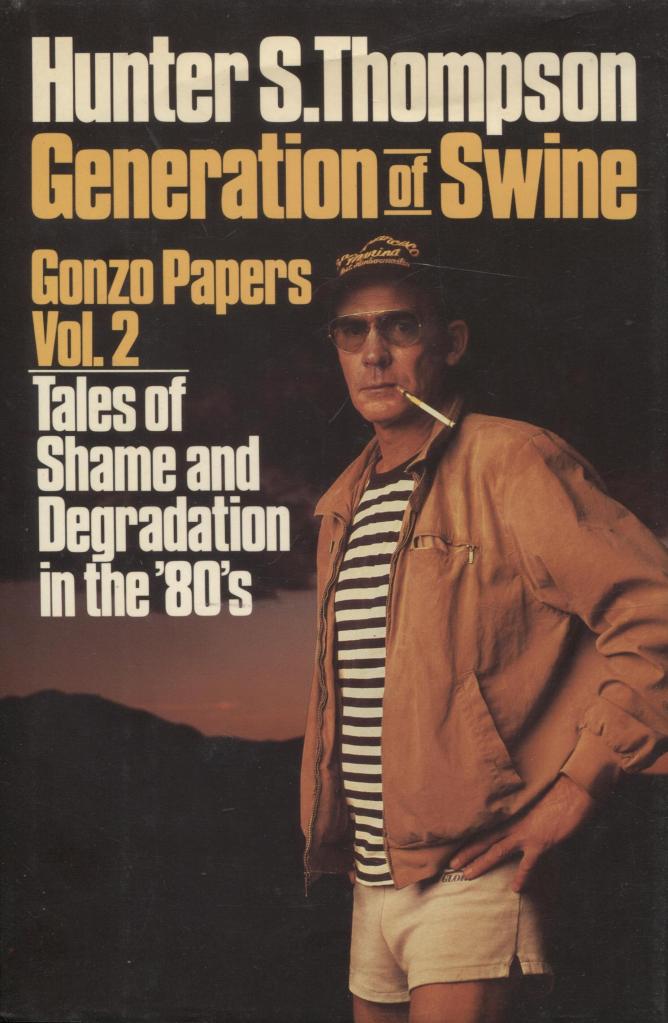
Thompson’s continuous chronicles of societal “shame and degradation” highlight his core philosophy: that capturing the emotional and moral character of a society and culture requires leaning into subjective, experiential truth rather than cold, empirical data.
Image: First-edition dust jacket of Hunter S. Thompson’s Generation of Swine: Gonzo Papers Vol. 2 (1988). Jacket design by George Corsillo; front photograph by Annie Leibovitz. Public domain, via Wikimedia Commons.
To most effectively interrogate this division, it is necessary to position Thompson within a broader linguistic framework rather than evaluating it solely based on journalistic intent.
A concise example from the opening pages of Fear and Loathing in Las Vegas illustrates the tension.
Thompson delivers a fiercely subjective claim:
“Vegas is the meanest town on Earth.”
He immediately follows this with a stark, historical detail:
“Until about a year ago, there was a giant billboard on the outskirts of Las Vegas, saying: DON’T GAMBLE WITH MARIJUANA! IN NEVADA: POSSESSION – 20 YEARS SALE – LIFE.”
These two consecutive lines encapsulate the entire generic conflict.
The space between Thompson’s emotional characterisation and the billboard’s literal, legal declaration exposes a fundamental difference in how language functions.
By isolating these two types of claims – one driven by raw empirical statement and the other by dynamic, emotive response – we can establish a dual concept of language.
This structural juxtaposition provides a framework for us to examine how Thompson’s highly stylized non-fiction actually operates (and what it achieves), as well as perfectly demonstrating an old twentieth-century linguistic philosophy that underpins the entire debate.
Analyzing Gonzo

Image: Election poster for Hunter S. Thompson’s 1970 campaign for Sheriff of Pitkin County, Colorado. Illustrated and printed by Thomas W. Benton. Public domain, via Wikimedia Commons.
The poster features the two-thumbed ‘Gonzo fist’ holding a peyote button, which became the defining emblem of Thompson’s “Freak Power” movement and his broader, defiant approach to political non-fiction.
In the framework of Logical Positivism, language is strictly divided into two distinct categories: the cognitive (or symbolic) and the emotive (interpretive).
Cognitive language is the rational statement or recording of thoughts, whereas emotive language is the expression of subjective feelings, serving a poetic, or aesthetic, purpose. In this dichotomy, language possesses literal meaning only insofar as it presents information that is empirically verifiable.
Conversely, emotive language is reserved for personal contemplation and affective resonance.
For a prominent Logical Positivist like A.J. Ayer, for example, emotive language does not – can not – constitute a legitimate “truth claim” in the manner a traditional journalist purports to do.
Image: Portrait of A.J. Ayer, Britain’s great Apostle of Logical Positivism (c. before 1930). Author unknown. Public domain, via Wikimedia Commons.

Because expressions of feeling are neither true nor false, Ayer argues that they merely convey a subjective ‘preference’ or emotional state. By this logic, for example, Thompson’s declaration that “Vegas is the meanest town on Earth” is dismissed as merely emotional.
While such statements possess clear aesthetic value, they do not satisfy the criteria for reasonable, journalistic ‘truth claims’ under Hersey’s, or Nocera’s, empirical standards.
American philosopher Morris Weitz, however, challenges this rigid positivist aesthetic.
He argues that subjective, emotive authors do not eschew truth claims entirely; rather, they formulate a different kind of truth claim than those found in purely empirical language. To reconcile this, Weitz introduces the concept of ‘depth meaning’ – the profound psychological and experiential truths that are suggested by the “aesthetic surface meanings” of a text.
For Weitz: “it is here that the emotive meanings of art become symbolic, and where one is to look for the truth claims of literature.”
The foundational flaw of Logical Positivism is its reductionist insistence that legitimate ‘meaning’ is reserved only for literal statements of verifiable fact.
In contrast, Weitz establishes that these second-order ‘depth meanings’ possess a far more significant potency. Though less obvious than cold empirical data, they offer a richer, more authentic rendering of the human condition.
When applied directly to Fear and Loathing in Las Vegas, Weitz’s concept of ‘depth meaning’ illuminates the profound socio-political truth underlying Thompson’s subjective prose.

Image: Hunter S. Thompson: “just another ugly refugee from the Love Generation”?
Pictured at his Woody Creek home in February 1997. Photograph by Helen Davis / The Denver Post. Digitized by John Venzel. CC BY-SA 4.0, via Wikimedia Commons.
The emotional distortions of Las Vegas reflect more than mere drug-addled hyperbole; they capture Thompson’s fractured reality as a self-described “ugly refugee from the Love Generation” navigating an increasingly conservative American landscape.
This evocative landscape – where, in Thompson’s effortless prose: “Joe Frazier, like Nixon, had finally prevailed for reasons that people like me refused to understand—at least not out loud,” offers a deeply insightful, second-order truth.
While this stylistic interpretation lacks the clinical, empirical purity demanded by Hersey, it constructs an authentic socio-cultural dynamic for contemplation.
Thompson’s aesthetic surface successfully communicates the overarching historical trauma of the era, revealing a psychological depth that traditional, objective chronicling could never authentically represent.
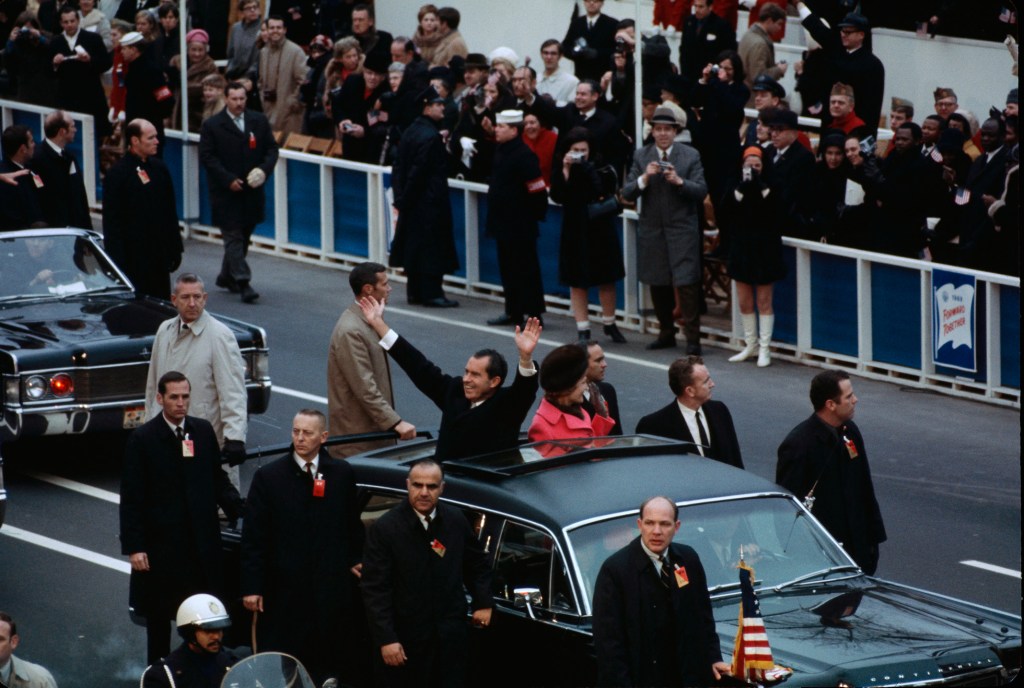
Image: President Richard Nixon and Mrs. Nixon waving from their limousine on Pennsylvania Avenue during his inauguration (20 January 1969). Photograph by the National Archives. Public domain, via Wikimedia Commons.
The socio-political shift toward Nixon’s America serves as the historical landscape that Thompson navigates – a reality he evocatively captures through subjective, emotional truth.
On the semantics of verification, one might even echo Weitz’s definitive sentiment:
“To refute the thesis that truth is successful verification would necessitate a discussion as long as the whole of this paper. Anyway, it’s not particularly relevant to our thesis since, even if truth were successful verification, the second-order meanings of art can be, in many cases, successfully verified.”
This insight delivers a fatal blow to the seemingly-Positivist framework championed by Hersey and Nocera.
Even if one accepts the rigid parameter that truth must be tethered to verifiable evidence, Weitz demonstrates that Thompson’s subjective distortions do not invalidate his journalism. The chaotic atmosphere, the palpable disillusionment, and the systemic corruption Thompson describes are not imaginary fabrications; they are highly potent, second-order meanings that are historically and psychologically verifiable by anyone who lived through the era.
By treating language as a dynamic system capable of conveying layered realities, Thompson proves that non-fiction does not need to choose between clinical accuracy and emotional honesty.
The ‘legend on the license’ need not be restricted to cold, empirical data when the deeper, socio-cultural truth of an era can be so successfully verified through the lens of subjective experience.
However, both the style and substance of Thompson’s ‘Gonzo Journalism’ require us to consider: does his reliance on the truth of his subjective perception of reality compromise (infect, perhaps) his documentation of the external world?
Hersey would undoubtedly argue that these second-order variations amount to fictional invention – a violation of the sacred journalistic compact.
Yet, this objection exposes the problem with absolute objectivity.
To demand a record of the world conceived purely in and of itself is to chase a philosophical impossibility.
Because human consciousness cannot be extricated from observation, any attempt to separate the reporter from the reportage is bound to fail.
Thompson’s work does not corrupt the outside world; rather, it acknowledges that the outside world can only ever be processed and understood through the lens of lived, individual experience.
The Truth in Fiction
Nocera’s fundamental grievance with Thompson’s writing stems from what he perceives as a kind of cynical catering to the prejudices of the contemporary counterculture, reinforcing “intellectually fashionable” stereotypes.
To substantiate the claim, Nocera highlights a volatile encounter in the latter half of Fear and Loathing in Las Vegas, wherein Thompson characterizes an adversarial police officer as a “noisy little asshole,” before launching into a discursive monologue: “I had been there with these fuzzy little shitheads… mean-tempered rule-crazy cops…”
In a sharp rebuke to the passage, Nocera argues:
“Thompson always liked to claim that what he was really after was the ‘truth.’ These, then, are his truths. You have to be a member of the Weather Underground to believe they contain any lasting insight.”
While Thompson’s characterization is undeniably subjective, Nocera’s critique overlooks the profound literary mechanism that renders the prose so compelling.
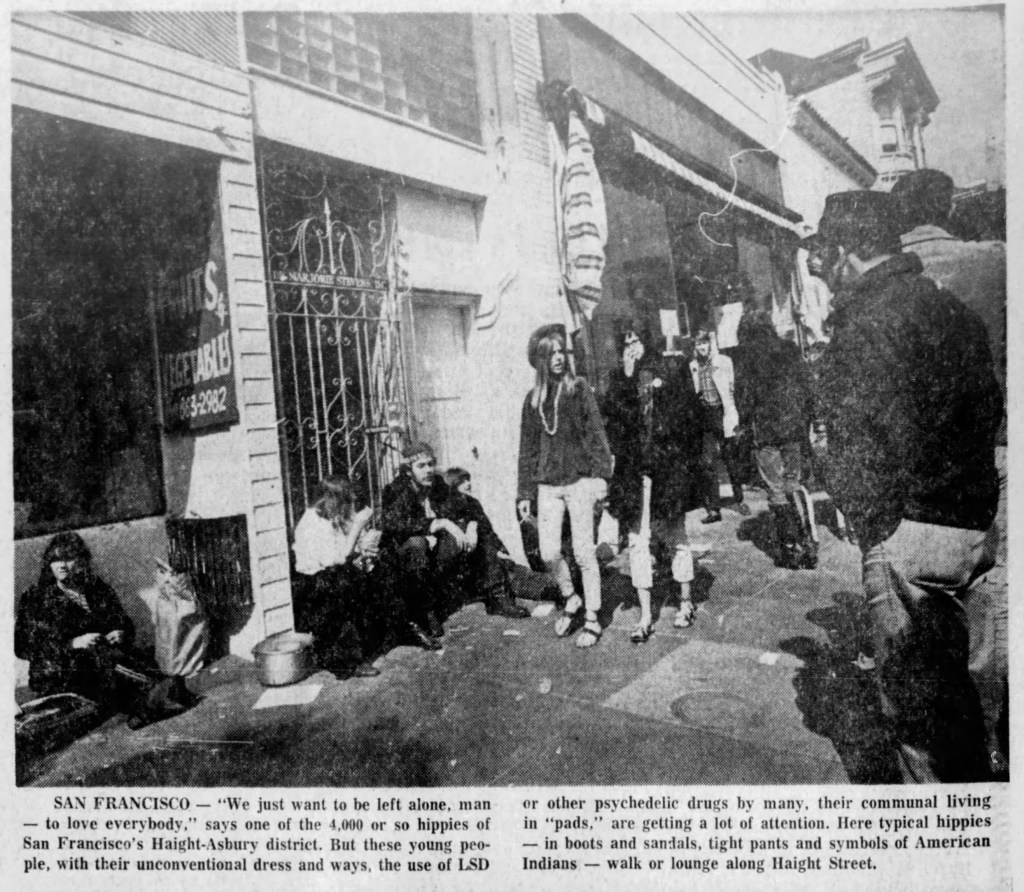
Image: Newspaper clipping depicting hippies in the Haight-Ashbury district, The Greenville News, 30 April 1967. Photograph by Associated Press. Public domain, via Wikimedia Commons.
The clinical, overtly mainstream media framing of the counterculture illustrates the exact kind of ‘traditional objectivity‘ Thompson subverted through his radical, honest and subjective ‘Gonzo journalism.’
The analytical limitation of Nocera’s position can be systematically explored by evaluating the boundary of contemporary non-fiction through the lens of author Brett Lott, alongside Ynhui Park’s philosophical concept of the “linguistic convention” in fiction.
What do we fundamentally mean when we evoke the concept of “truth”?
To address this, Ynhui Park offers a compelling, constructivist epistemology:
“There is no world tout court, no knowledge tout court. The world is made by the act of knowing it, and knowledge is constructed by a conceptual system. Since there are various ways of devising a conceptual system, and since knowledge is relevant to a conceptual system, there are many forms of knowledge.”
Any attempt to narrate or organize the “unwashed mass of facts” that constitutes human existence represents merely one possibility among many.
Consequently, Hersey’s lauded, clinical style in Hiroshima inherently amounts to a just another form of narrativization and bias; by selecting, ordering, and privileging certain individual stories over others, it unavoidably introduces its own structural subjective perspective.
While narrative art might be dismissed by Positivists as a symbol-system restricted to emotion and contemplation over empirical cognition, Park’s framework reveals a far more complex generic overlap.
For Park, the surface meanings of fiction are governed by a specific “linguistic convention” dictating that “the words and sentences in a linguistic product should not be taken as referring to any real things.”
Although realistic novels frequently utilize real-world geography and historical anchors – such as Flaubert setting Madame Bovary in provincial France – the convention dictates that: “the language in a fiction means what it means without its real referent.”
In other words, the second-order, emotional, and psychological “depth meanings” serve as the primary function of the text, rendering the literal, cognitive surface data largely secondary or incidental to the work’s ultimate truth claim.
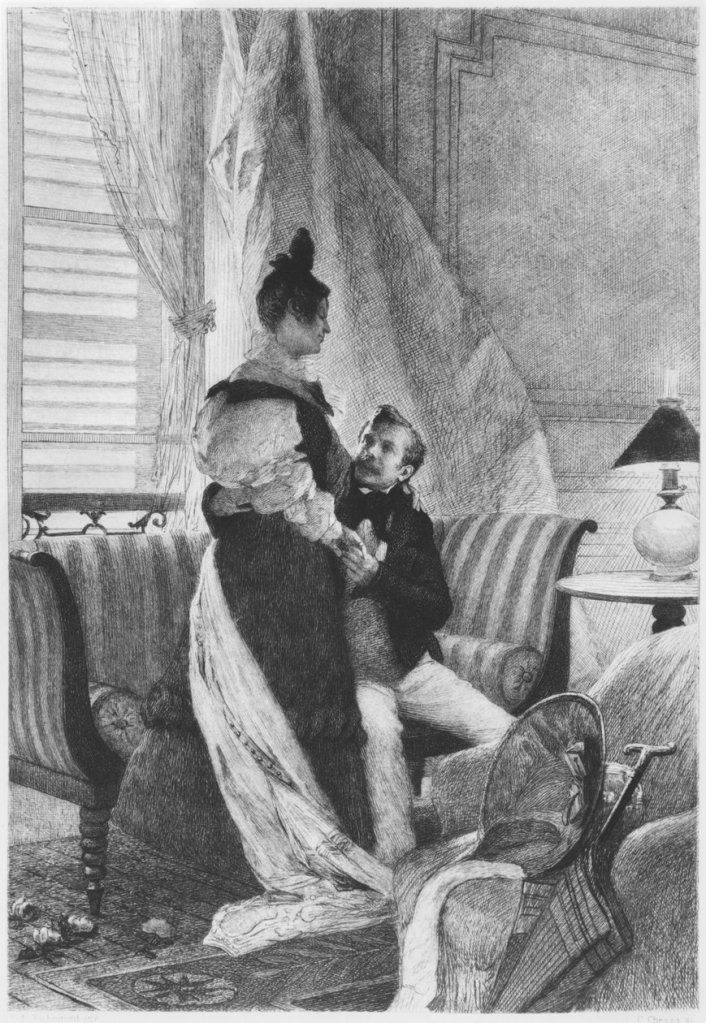
Image: Emma Bovary and Rodolphe. Illustration for Gustave Flaubert’s Madame Bovary (1905).
Etching by Carlo Chessa, after a composition by Alfred de Richemont. Public domain, via Wikimedia Commons.
If a classic work of fiction like Flaubert’s relies on real-world referents to anchor its internal, second-order meanings, could a work of non-fiction like Fear and Loathing in Las Vegas reverse this dynamic – utilizing subjective distortions to more accurately expose the real world’s underlying truth?
The Referent in Non-Fiction
Unlike fiction, non-fiction operates under the linguistic convention that its language must maintain a direct relationship to a real, external referent.
Consequently, evaluating Nocera’s critique of Thimpson through a traditional empirical lens leads to the assumption that the primary referent in the example he gives is the crudely caricatured police officer. Under that literal reading, Thompson’s prose appears to violate generic boundaries by corrupting objective reportage with aggressive, subjective distortion.
There is, however, a far more illuminating perspective to consider: the true referent of this sequence in Fear and Loathing in Las Vegas is not the external police officer at all, but rather Thompson’s own psychological self-image.
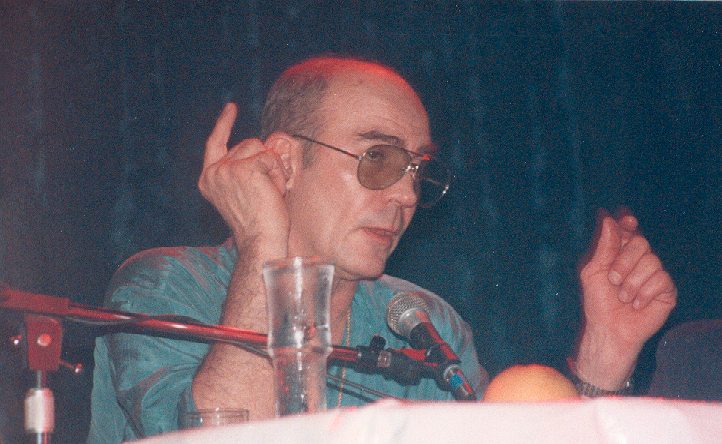
Image: Hunter S. Thompson, Long Beach, California (May 1989). Photograph by Rs79. CC BY-SA 3.0, via Wikimedia Commons.
If the true referent of Gonzo Journalism is shifted inward, does this hyper-focused curation of the author’s persona undermine the external world, or does it perhaps offer a more honest reflection of the process of truth?
Brett Lott establishes this interior focus by introducing the concept of the “self as continent,” positioning the non-fiction author as its “first explorer.”
For Lott, the “creative” dimension of creative non-fiction begins precisely within the subjective self – the very element that Nocera and Hersey treat with absolute rhetorical suspicion.
Lott explains that: “without you and who you are, a piece of writing is simply nonfiction: a police report.”
Because subjectivity remains an inescapable consequence of narrativization, any attempt to move past the sterile notation of a literal information log requires an embrace of an authorial lens.
Lott argues that: “when [we] begin to incorporate the sad and glorious fact that the way [we] see [the world] shapes and forms what it is to be seen, [we] end up with creative nonfiction.”
Without this epistemological realization, non-fiction is reduced to a passive note-taking exercise. With this in mind, one can easily see how Hersey’s celebrated stance of absolute objectivity in Hiroshima is less an example of empiricism to other Narrative Journalists, than simply another deliberate narrative construction.
While the solemnity of the subject matter in Hiroshima rendered a detached, affectless prose exactly the most appropriate creative style for that text, it remains a choice of style, not of substance – an active posture of anti-affectation perhaps, rather than an objective chronicle.
What Nocera fundamentally overlooks in his critique is Thompson’s rigorous exploration of his own internal pathos.
Operating as a self-described, over-thirty drug dilettante in 1971 – poised precisely between the political tremors of Nixon’s initial election and his impending landslide re-election – Thompson uses his interiority as a microcosm for a broader cultural collapse.
Fear and Loathing in Las Vegas remains legitimately anchored within the non-fiction genre because its primary referent is the verifiable, authentic consciousness of Thompson himself navigating this historical landscape, rather than the incidental caricature of the police officer.
Through this framework, the text’s heavily stylized, substance-fueled aesthetic operates as a vital conduit for Weitz’s second-order, emotive meanings.
Thompson’s surreal narrative serves as a profound document of collective lamentation, famously observing: “‘Consciousness Expansion’ went out with LBJ… and it is worth noting, historically, that downers came in with Nixon.”
By mapping this journey, Thompson effectively charts the continent of himself as a terrain of profound political mourning and melancholy. In doing so, he captures the devastating psychological reality of a generation caught in the morass of a proper, bitter end to the 1960s – a deep historical truth that an affectless, traditional news report could never hope to verify.
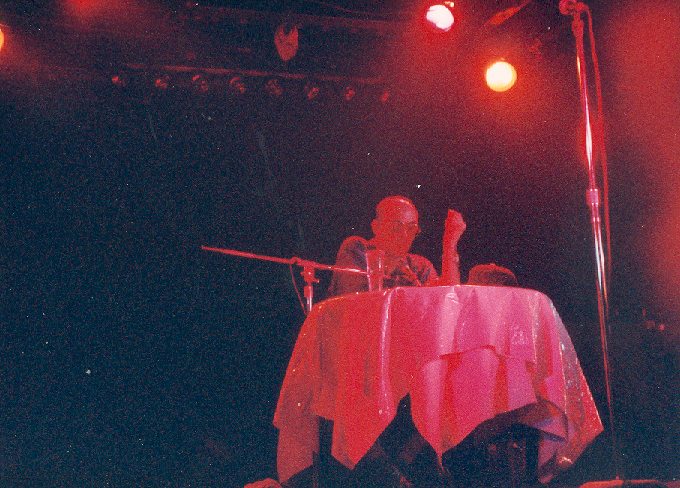
Image: Hunter S. Thompson under stage lighting in Long Beach, California (May 1989). Photograph by Rs79. CC BY-SA 3.0, via Wikimedia Commons.
Hunter S. Thompson: an ugly refugee on the outside looking in? If the authentic consciousness of the author serves as the primary referent of the text, this highly stylized persona becomes a necessary lens to process a fractured external reality.
As soon as “non-fiction” becomes creative, it may well migrate away from the purely cognitive sphere of communication and lean toward the emotive or poetic; however, this structural shift does not automatically disqualify its claim to cognitive truth.
To the delicate question of falsity – “in my attempt to put order to my days, am I deluding myself, inflicting an order that was and is nowhere to be seen?” as Lott anxiously ponders – we can only respond with further introspection.
Our ultimate inability to uncover a single, unmediated narrative means that we can only approach the self, and the world, through a framework of rigorous and ruthless questioning.
The task of extracting order from chaos remains a precarious tightrope walk, demanding that the writer resist the urge to completely invent reality or take artistic shortcuts. Ultimately, the decision of where to draw that line can only reasonably be based on individual awareness and the profound depth of our own interiority.
In this light, the arduous task of writing creative non-fiction ceases to be a mere journalistic exercise; it becomes tantamount to our very being.
Ultimately, human consciousness is fallibly, yet necessarily, task-bound to work toward an understanding of its own history, attempting to construct and comprehend order – however chaotic – in what may come.
From this perspective, Nocera’s empirical critique, alongside the broader institutional anxieties leveled against New Journalism, is revealed to be at best reactionary and at worst profoundly short-sighted.
By demanding an impossible standard of unmediated objectivity, these critics fail to realize that the traditional archive is itself a curated narrative.
In the end, the only sense of truth an individual can ever hope to uncover is, and will always be, their own interior, experiential reality. No one in the landscape of American letters could have possibly inhabited or documented that reality with greater honesty, depth, and fierce defiance than Hunter S. Thompson.

Image: SVG by Notwist. Symbol first illustrated by Thomas W. Benton on a 1970 poster (see below)., Public domain, via Wikimedia Commons.


Leave a Reply